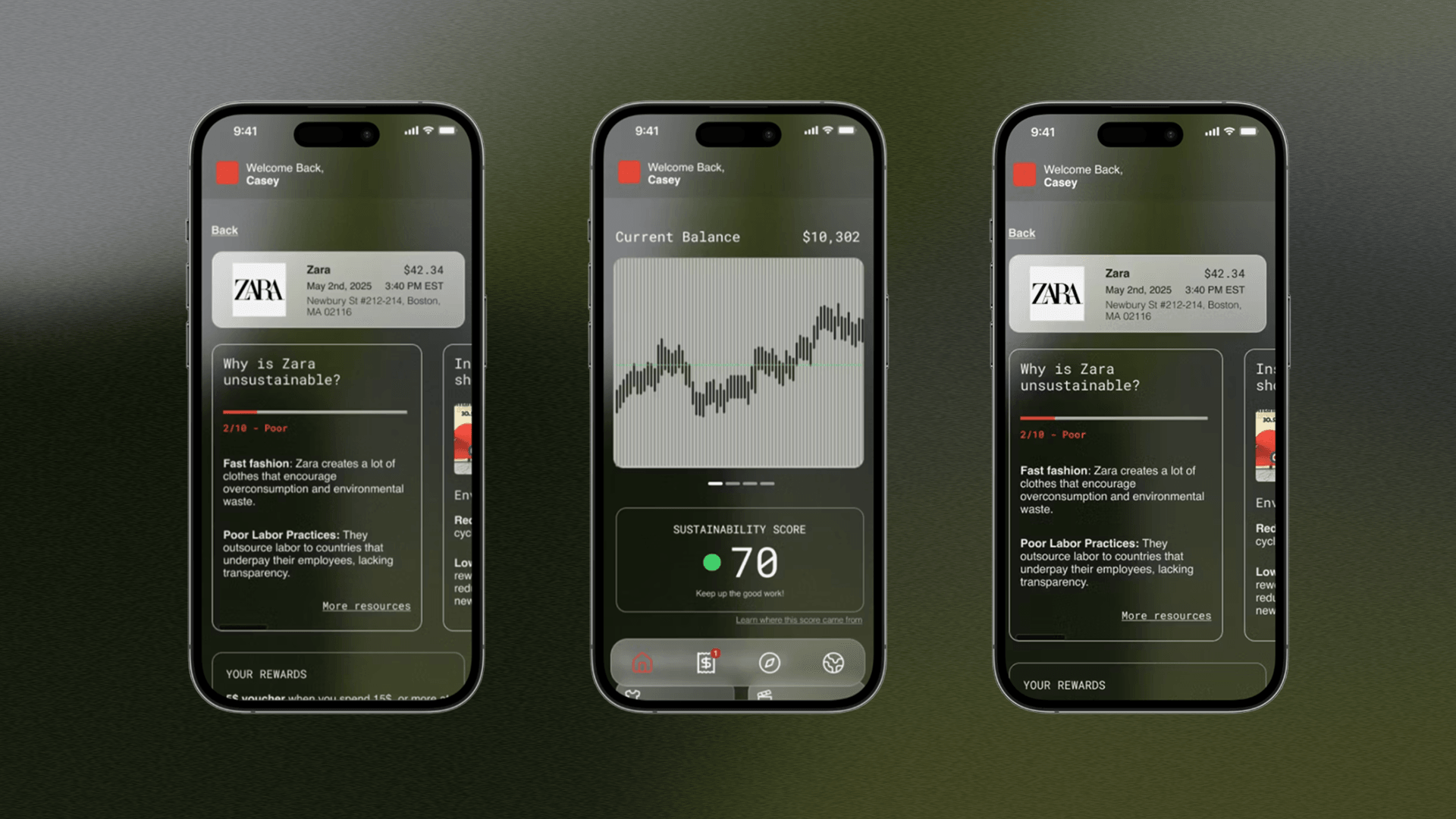
Re:ceipt
Mobile budget-tracking designed to help young adults develop sustainable financial literacy through eco-friendly purchase suggestions.
2025
UX Designer
Product Design, UX Research
Casey Lee
The Problem
Young adults want to spend sustainably, but convenience and cost get in the way, and budgeting apps show where their money goes without showing its impact.
The Solution
Re:ceipt adds sustainable suggestions where people already track spending, focused on the categories where they overspend most.
User Research
To better understand the financial and sustainability behaviors of young adults, We surveyed 31 people, mostly aged 18–24, about their spending and sustainability habits.
The two biggest blockers were convenience (42%) and cost (39%).
68% rated themselves above a 5 out of 10 on sustainability. Almost none of them could actually see the impact of what they bought.
Overspending showed up most in eating out (90%), clothing (42%), and subscriptions (29%).
Key Design Decisions
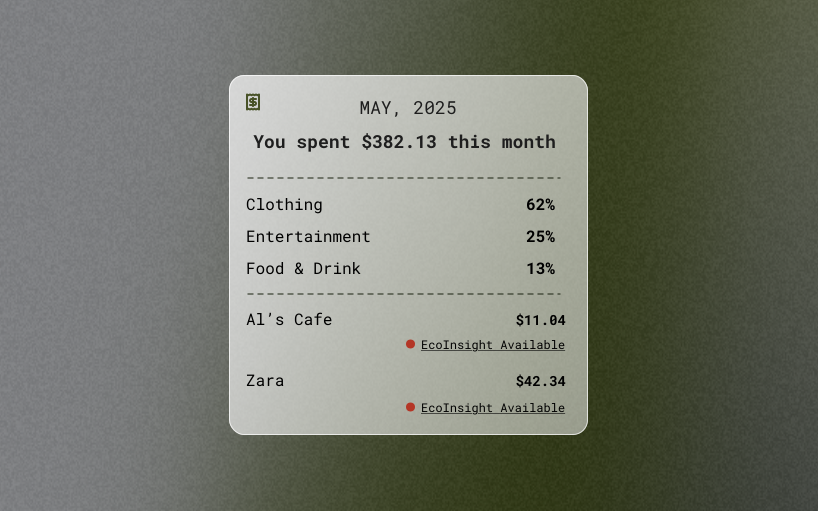
Suggestions where the spending happens
About a third of surveyors wanted to know more about brands' impact, but few would research it on their own. Since convenience was also the biggest blocker mentioned by surveyors, we had suggestions appear inside the transaction feed, next to the purchase they relate to for quick scanning.
Outcomes
Won the New Designer Award at the Cornell UX Design-a-thon judged by a live panel of industry design leaders.
Takeaways
→ Targeting two forms of sustainability in one product could have introduced scope creep quickly. Keeping the research tightly scoped is what helped us maintain the core purpose of the application.
→ Working asynchronously 300 miles apart required high-level communication and trust between designers.
Retrospective
→ The visual hierarchy needs development. Certain elements compete with others for attention or distract from the contents of the app.
→ Sustainability scores go out of date as companies evolve. In production we'd need a real process to keep them up to date, or risk eroding user trust.